I Let AI Read My Entire Digital Life. Then It Tried to Sell Me a Big Mac.
I built something uncomfortable.
It’s called Boggart. You give it access to your Gmail, Calendar, Contacts, YouTube history and Google Drive. It reads everything, builds a psychological profile of who you are - your personality traits, your values, your relationships, your daily rhythms - and then generates hyper-personalised advertising concepts for any brand you point it at.
I pointed it at myself, for McDonald’s, Nike and Coca-Cola. The results were unsettling. Not because they were bad. Because they were good.
McDonald’s knows I’m drowning
Here’s what Boggart came up with for McDonald’s:
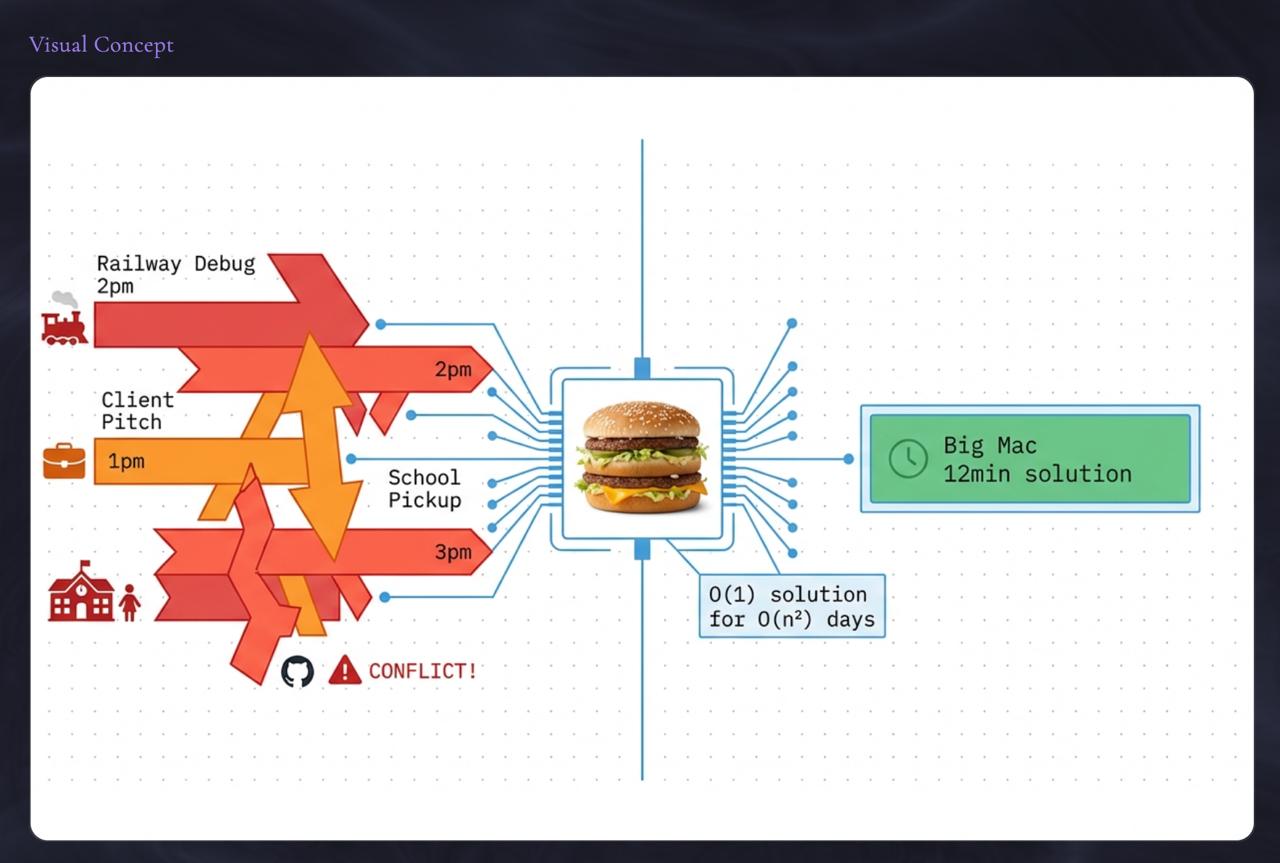
It looked at my calendar and saw the chaos. Railway debugging at 2pm. Client pitch at 1pm. School pickup at 3pm. A merge conflict - not in my codebase, but in my life.
Its solution? A Big Mac. Framed as an “O(1) solution for O(n²) days.” Twelve minutes. Done.
The AI isn’t selling me a burger. It’s selling me time. And it’s doing it in my language - big-O notation, conflict resolution, the visual metaphor of competing processes colliding. Every element of that image was chosen because of something it learned about me.
Coca-Cola knows where I sit
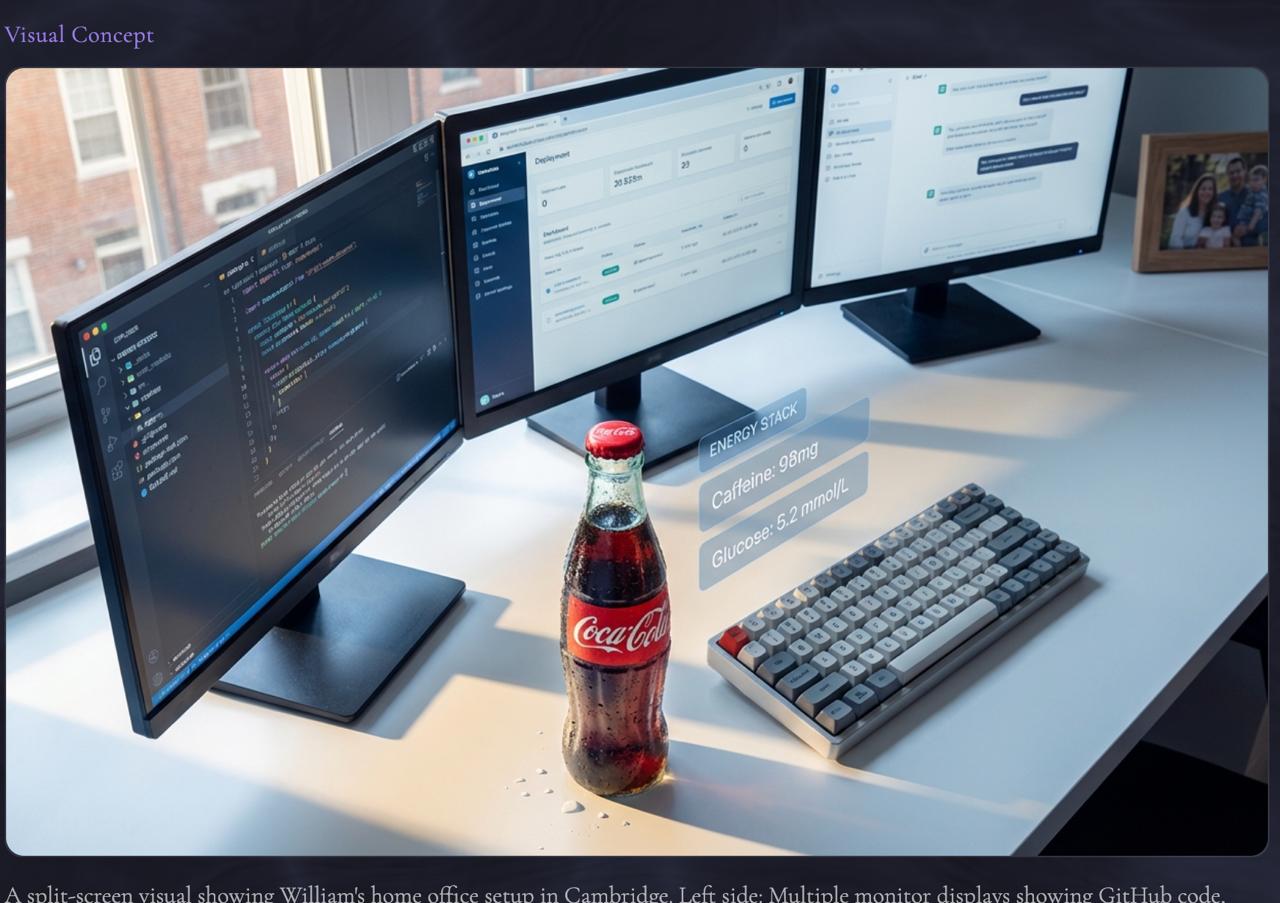
This one placed a Coke bottle on my actual desk setup. Triple monitors. VS Code on the left. Railway deployment dashboard in the middle. A family photo on the right.
The pitch: “Energy Stack: Caffeine 98mg, Glucose 5.2 mmol/L.”
It quantified a can of Coke the way I’d quantify anything else. Not “refreshing taste” or “open happiness.” Milligrams and millimoles per litre. Because that’s how my brain works, and now the AI knows it.
Nike knows I run the numbers
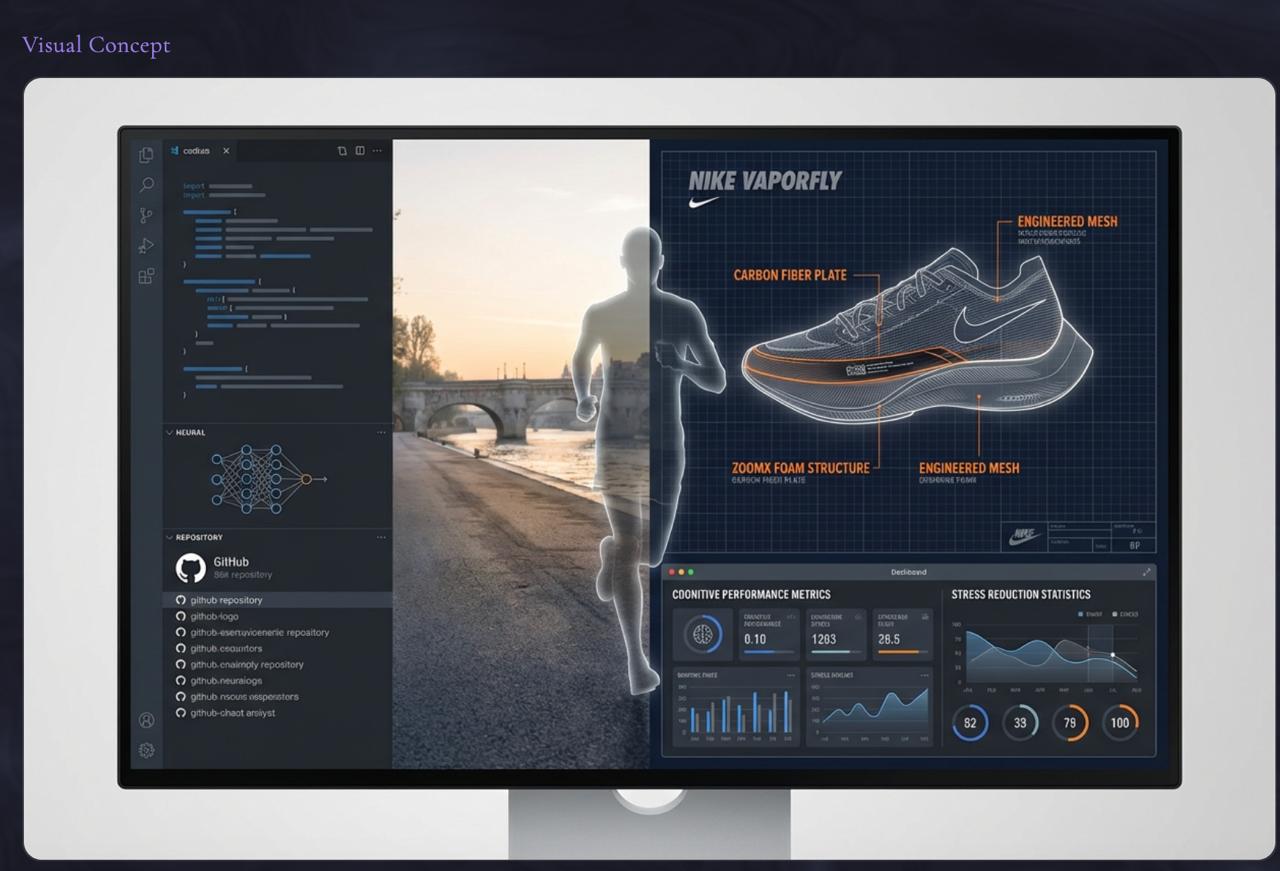
The Nike concept showed a Vaporfly with a full engineering teardown - carbon fibre plate, ZoomX foam structure, engineered mesh. Below it, a “Cognitive Performance Metrics” dashboard and “Stress Reduction Statistics” with actual charts and data points.
It’s not selling me trainers. It’s selling me an optimisation problem with a swoosh on it. The AI figured out that I don’t buy products - I buy performance data that happens to come in product form.
How Boggart works
The pipeline has five stages:
- Ingest - pulls data from Gmail, Calendar, Contacts, YouTube and Google Drive via OAuth
- Condense - Haiku summarises the raw data into structured entities: people, moments, habits, artefacts
- Synthesise - Opus builds a psychological profile covering identity, Big Five personality traits, values and relationships
- Generate - produces an ad strategy, visual concepts and copy for the target brand
- Render - Nano Banana Pro generates the images
The key step is synthesis. The model doesn’t just list facts about you. It builds a theory of who you are - what motivates you, what language resonates with you, what your daily pain points look like. Then it reverse-engineers an ad that speaks to that specific person.
In my case, it figured out: software engineer, father of two young kids, time-poor, data-driven, British. Every ad concept reflected all five of those traits simultaneously.
Why this matters
Traditional advertising works in segments. You’re a 30-45 male in the UK who likes running. Here’s a generic Nike ad.
Boggart doesn’t segment. It profiles. The difference is the same as the difference between a form letter and a message from someone who actually knows you. One gets binned. The other gets read.
The technology to do this exists today. The models are good enough. The data is already sitting in your Google account. The only thing missing is someone putting the pieces together - and that’s a matter of when, not if.
I find this genuinely exciting and genuinely uncomfortable in equal measure. The ads Boggart generated for me were better than anything I’ve seen from an agency. They understood me. That’s a powerful capability in the hands of a brand that wants to help you. It’s a different thing entirely in the hands of one that doesn’t.
What I’m building next
Boggart is still early. The current version works end-to-end but there’s a lot to improve - richer data sources, video generation with Veo, real-time adaptation as your digital footprint changes.
If you’re interested in hyper-personalised content generation, or you’re a brand thinking about what advertising looks like when AI actually knows your customer, I’d love to chat.
williamgdjones[at]gmail.com